Kona manta ray night dive and snorkel
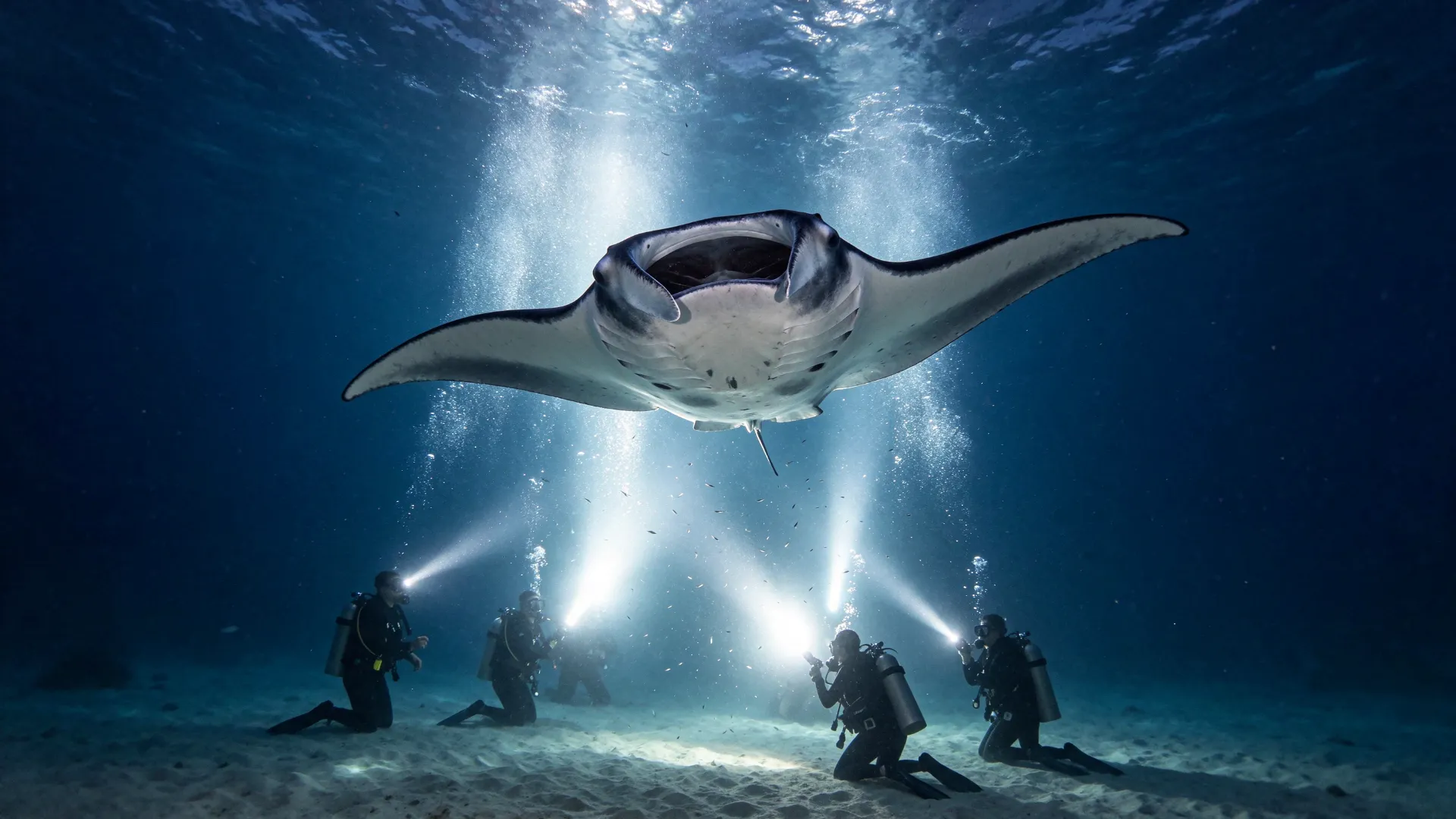
The Kona manta ray night dive is one of the most famous dives in the world: after dark, reef manta rays with wingspans of up to 12 feet or more glide and somersault through the dive lights just above your head to feed on plankton. Snorkelers can watch the same show from the surface.
How the manta ray night dive works
Boats head out around sunset to sites off the Kona coast where lights attract plankton, and plankton attract mantas. Divers kneel on the sandy bottom at around 30–40 feet in a circle, pointing their lights up. Snorkelers float at the surface holding onto a lit board, looking down into the same column of light.
The mantas arrive to feed, looping and barrel-rolling through the beams, sometimes passing within inches. It runs all year, and sightings are frequent, though never guaranteed.
Dive, snorkel and site options
Both styles see the same mantas — choose by your comfort and certification.
Manta ray night snorkel
No certification needed. You float with a wetsuit and flotation, holding a light board. The most popular option for families.
Manta ray night dive
For certified divers. Often a two-tank trip: a twilight reef dive, then the manta dive after dark.
Keauhou Bay site
South of Kailua-Kona, close to the resorts in Keauhou. Short boat ride.
Garden Eel Cove
North of Kailua-Kona near the airport, a site nicknamed Manta Heaven. Departures from Honokōhau Harbor.
Black-water dive
For experienced divers: a night drift over deep water to see strange, glowing open-ocean creatures. A Kona specialty.
Rebooking policies
Many operators offer a free trip again if no mantas show up. Ask when you compare quotes.
Manta ray etiquette
Mantas have a protective mucus coating that keeps them healthy, so never touch them, even if they come close. Stay still, keep your light pointed up and let them come to you.
The water at night can feel cool even in Hawaii, so a full wetsuit is usually provided. If you get seasick, take medication before the trip; boats wait at the site in open water.
Flying over Kīlauea on this trip? Book your Big Island helicopter tour before the manta dive, not after: divers should wait 12 hours or more before flying.
Get manta ray night dive quotes
Tell us whether you want to dive or snorkel, your dates and group size, and Kona operators reply with availability and prices.
- Free to request, no booking fee
- Replies from licensed operators, usually within one business day
- Certified or never dived — tell us and we match the right trip
We never sell your details to marketers. Your request only goes to dive and snorkel operators who can take you out.
Manta ray night dive questions
Do you need to be certified for the Kona manta ray night dive?
Divers need a scuba certification for the Kona manta ray night dive, but snorkelers do not. The manta ray night snorkel is open to anyone who can float with a wetsuit and flotation.
When is the best time to see manta rays in Kona?
Manta rays can be seen off Kona all year. Sightings are frequent in every season, though never guaranteed, and many operators offer a free rebooking if no mantas appear.
Is the manta ray night snorkel scary?
Most people find it calm and magical. You float at the surface holding a lit board with a guide nearby, and the mantas, which have no teeth or stinger, feed on plankton in the light below you.
How big are the manta rays in Kona?
The reef manta rays off Kona commonly have wingspans of 8 to 12 feet, and some are larger.
Can you touch the manta rays?
No. Touching a manta ray damages the protective coating on its skin. Stay still and let them pass you.